Air Freight vs Sea Freight: What Is the Difference?
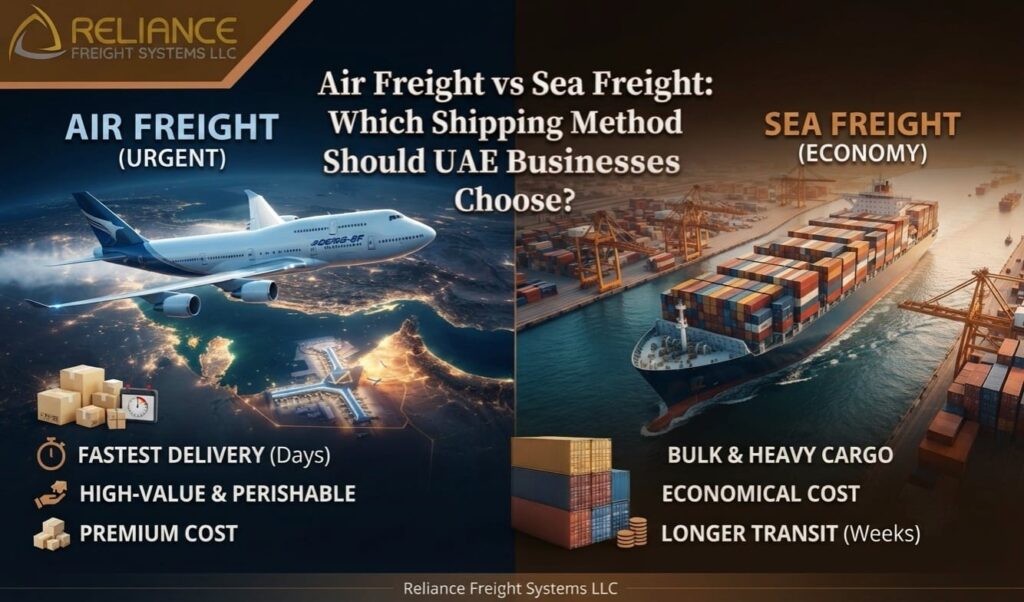
Air freight involves transporting cargo by aircraft between
airports. It is commonly considered for shipments where shorter transit times
are important.
Sea freight involves transporting cargo by vessels between
seaports. It is widely used for large-volume, heavy, or containerized shipments
and can be suitable when goods can be transported over a longer timeframe.
The main difference is not simply speed or cost. Businesses
should consider the complete logistics requirement, including cargo
characteristics, handling, customs procedures, and final delivery.
| Factor | Air Freight | Sea Freight |
|---|---|---|
| Transportation Speed | Generally faster | Generally slower |
| Cargo Capacity | More limited | Suitable for large volumes |
| Cost | Generally higher | Often more economical for larger shipments |
| Suitable Cargo | Time-sensitive and smaller shipments | Large, heavy and containerized cargo |
| Planning | Can support urgent requirements | Usually requires advance planning |
| Delivery Urgency | Suitable for time-sensitive cargo | Better for planned shipments |
When Should UAE Businesses Consider Air Freight?
- The shipment is time-sensitive
- Faster delivery is required
- The cargo is relatively small or lightweight
- Inventory needs to be replenished quickly
- The goods have a high value compared with their weight
- Delays could affect business operations
- The shipment is required for an urgent project
When Should UAE Businesses Consider Sea Freight?
Sea freight can be considered when businesses need to transport larger quantities of cargo and have more flexibility with delivery timelines.Ocean transportation provides substantial cargo capacity, making it suitable for commercial shipments, containerized cargo, and larger or heavier goods.Sea freight may be suitable when:- The shipment is large or heavy
- The delivery is not highly time-sensitive
- Transportation cost is an important consideration
- The business is moving commercial quantities
- The shipment can be planned in advance
- Full-container or consolidated shipping is required
Air Freight vs Sea Freight: Which Is More Cost-Effective?
Shipping cost is one of the most important considerations when selecting a transportation method.Air freight can have a higher transportation cost, particularly for heavier shipments. Sea freight can be more practical for businesses moving larger quantities of cargo.However, businesses should not compare only the basic freight rate.The total logistics cost may include:- Freight charges
- Fuel or carrier surcharges
- Origin charges
- Destination charges
- Terminal handling
- Customs clearance
- Storage
- Insurance
- Local transportation
- Documentation
- Packaging
Air Freight vs Sea Freight: Which Is Faster?
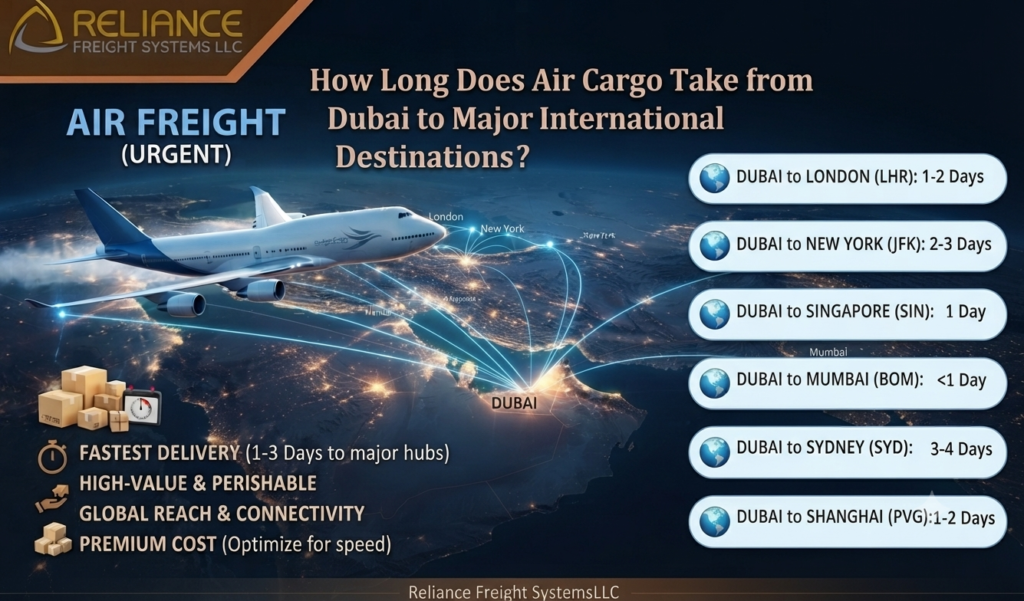
Air freight is generally faster than sea freight for international cargo transportation.This makes air transportation useful for businesses that need to move goods within a shorter timeframe.Sea freight generally takes longer because cargo must be transported by vessel and may involve additional stages such as port handling, loading, unloading, customs clearance, and inland transportation.However, the actual delivery timeline depends on the complete shipment process.A business should consider:- Pickup time
- Export documentation
- Origin handling
- Customs procedures
- Transportation time
- Port or airport handling
- Import clearance
- Final delivery
How Cargo Size and Weight Affect the Decision
Cargo dimensions and weight are important factors when deciding between air and sea transportation.Air freight can be suitable for smaller shipments where speed is more important than transportation cost.Sea freight can be more practical for large or heavy shipments because vessels can accommodate significant quantities of cargo.Businesses should consider:- Cargo weight
- Cargo dimensions
- Number of packages
- Total shipment volume
- Required container capacity
- Available transportation options
- Delivery deadline
Air Freight vs Sea Freight for Different Types of Cargo
The type of product being shipped can also influence the transportation decision.For example, businesses transporting urgent spare parts may prioritize speed, while companies importing large quantities of general merchandise may prioritize cargo capacity and transportation costs.Before selecting a method, businesses should consider:- Product value
- Weight
- Dimensions
- Shelf life
- Fragility
- Packaging requirements
- Handling requirements
- Delivery deadline
- Regulatory requirements
Air Freight vs Sea Freight for UAE E-Commerce Businesses
E-commerce businesses often need to balance product availability, transportation cost, and delivery speed.Air freight can be useful when an e-commerce business needs to replenish inventory quickly or respond to unexpected demand.Sea freight can be considered for planned bulk inventory shipments where the business can work with longer lead times.For example, an e-commerce company may use:- Sea freight for planned bulk inventory
- Air freight for urgent stock replenishment
- Consolidation for smaller commercial shipments
- Road transportation for local or regional distribution
What Should UAE Importers and Exporters Consider Before Shipping?
Before booking a shipment, businesses should evaluate several factors instead of choosing a transportation method based only on price.Delivery Deadline
How quickly does the cargo need to reach its destination?
Cargo Size and Weight
Is the shipment small, large, heavy, or containerized?
Budget
What is the available transportation budget, and what additional logistics charges may apply?
Product Type
Does the cargo have specific handling, packaging, storage, or regulatory requirements?
Destination
What transportation routes and services are available between the origin and destination?
Inventory Requirements
Can the business wait for a longer shipment timeline, or is faster replenishment required?
Total Logistics Cost
Businesses should consider freight, handling, customs, storage, transportation, insurance, and other applicable costs.
Can Businesses Use Both Air Freight and Sea Freight?
Yes. Businesses do not necessarily need to use only one transportation method.A company may use sea freight for regular bulk shipments while using air freight for urgent or smaller consignments.For example, a UAE importer could transport its planned inventory by sea and use air freight when additional stock is required urgently.This approach can help businesses balance:- Transportation cost
- Delivery speed
- Inventory availability
- Customer requirements
- Supply chain flexibility
Air Freight vs Sea Freight for Import and Export Businesses in UAE
UAE importers and exporters often manage shipments involving different countries, cargo types, and delivery requirements.The UAE’s strategic location makes it an important logistics hub connecting businesses with markets across the Middle East, Asia, Europe, Africa, and other regions.For businesses managing international shipments, the transportation method should be selected according to the individual shipment rather than using the same approach for every order.A planned bulk shipment may be suitable for sea transportation, while an urgent replacement component may require air transportation.This makes shipment planning an important part of international logistics management.How Freight Forwarding Can Help Businesses Choose the Right Option
Selecting between air and sea transportation involves more than comparing two freight prices.A freight forwarding company can help businesses coordinate different stages of the shipment, including transportation, documentation, customs clearance, cargo handling, warehousing, and delivery coordination.Depending on the shipment, logistics support may include:- Freight booking
- Cargo coordination
- Documentation support
- Customs clearance
- Consolidation
- Warehousing
- Transportation
- Delivery coordination
Why Choose Reliance Freight Systems for International Shipping?
Experienced Logistics Team
Reliance Freight Systems is supported by an experienced team providing freight forwarding and logistics services for international shipments.
Air and Sea Transportation Options
Businesses can access different transportation solutions depending on cargo requirements, delivery timelines, and shipping needs.
Worldwide Network
Reliance Freight Systems works with overseas agents and logistics partners to coordinate international shipments.
End-to-End Logistics Support
Services can include freight forwarding, customs clearance, warehousing, trucking, logistics, distribution, and other transportation requirements.
Solutions for Different Cargo Requirements
The company supports different types of commodities and shipment requirements, allowing businesses to discuss their specific logistics needs.
Personalized Service
Shipping requirements can vary between businesses. Reliance Freight Systems focuses on providing logistics solutions based on individual shipment requirements.
Air Freight or Sea Freight: Which Should Your Business Choose?
There is no universal answer to whether air freight or sea freight is better.Air freight may be appropriate when:- Speed is a priority
- The shipment is time-sensitive
- The cargo is relatively small
- Inventory needs urgent replenishment
- The cost of delay is significant
- The shipment is large or heavy
- Cost efficiency is important
- The goods are not urgently required
- The shipment can be planned in advance
- Containerized transportation is suitable
Frequently Asked Questions
Is air freight faster than sea freight?
Generally, yes. Air freight usually provides faster international transportation than sea freight. However, the complete delivery timeline also depends on pickup, documentation, customs clearance, handling, and final delivery.
Is sea freight cheaper than air freight?
Sea freight is generally more economical for larger and heavier shipments, while air freight can have a higher transportation cost. Actual pricing depends on the cargo, route, carrier, volume, weight, and additional charges.
Which is better for small shipments from the UAE?
For urgent small shipments, air freight may be suitable. For smaller non-urgent commercial shipments, consolidation may also be considered depending on the cargo and destination.
Which is better for large shipments?
Sea freight is commonly considered for large-volume, heavy, and containerized shipments because vessels can accommodate substantial cargo volumes.
Can UAE businesses use both air and sea freight?
Yes. Businesses can use air freight for urgent shipments and sea freight for planned or larger shipments. Using different transportation methods can help businesses manage different supply chain requirements.
How do I choose between air freight and sea freight?
Consider the required delivery time, cargo size, weight, product type, destination, budget, inventory requirements, and total logistics costs. A freight forwarding provider can also help evaluate suitable options for a particular shipment.
Does sea freight take longer than air freight?
Generally, yes. Sea freight usually has a longer transportation timeline, although the actual time depends on the shipping route, carrier, port procedures, customs clearance, and final delivery.
Is air freight suitable for high-value goods?
Air freight may be considered for certain high-value goods where shorter transit times and controlled transportation are important. The suitability also depends on the product, packaging, handling requirements, and applicable regulations.